Showing posts with label Body Mind Spirit Brilliance with your Five Vital IQs. Show all posts

Thursday, October 16, 2008

Not Sure When Baseball became Important in the Presidential Elections....but Apparently it is Now


Palin Splits Her Baseball Loyalties

Gov. Sarah Palin has added a twist on the old baseball maxim of “root root root for the home team” – as in, “root, root, root for the home team, depending on where you are.”

As The Caucus noted, Ms. Palin visited Salem, N.H. Wednesday night and said she looked forward to watching Senator John McCain debate Senator Barack Obama “right here, in the heart of Red Sox Nation.” Ms. Palin said that “Red Sox fans know how to turn an underdog into a victor,” a timely applause line given that the Sox trail the Tampa Bay Rays three-games-to-one in the best-of-seven American League Championship Series.

It seems, however, that Ms. Palin voiced a similar sentiment – actually, identical sentiment – last week at a rally in Florida.

“How about those Tampa Bay Rays?” Ms. Palin said after the Rays defeated the Chicago White Sox.

“You know what that tells me? It tells me that the people in this area know a little something about turning an underdog into a victor.”

The Democratic National Committee was quick to point out — and mock – Ms. Palin’s apparent sporting duplicity.

“Apparently this team of mavericks thinks straight talk means saying one thing to Rays fans and another to Red Sox fans,” said Damien LaVera, D.N.C. spokesman

The Red Sox or Rays will meet the National League champion Philadelphia Phillies in the World Series.

Ms. Palin is scheduled to visit eastern Pennsylvania later this week.


Love your way... you are Brilliant!

Alan Davidson is the author of the Free report

"Body Breakthroughs for Life Breakthroughs: How to Peak Your

Physical, Emotional, Mental, Moral, and Spiritual IQs for a

Sensational Life"

available at www.throughyourbody.com

Alan is also the author of Body Brilliance:

Mastering Your Five Vital Intelligences (IQs)

http://bodybrilliancebook.com/bbb_movie/

Watch the Body Brilliance Movie

Tuesday, October 14, 2008

Obama Details Plan to Aid Victims of Fiscal Crisis


TOLEDO, Ohio — Senator Barack Obama proposed new steps on Monday to address the economic crisis, calling for temporary but costly new programs to help employers, automakers, homeowners, the unemployed, and state and local governments.

In an address here, Mr. Obama, the Democratic presidential nominee, proposed giving employers a $3,000 tax credit for each new hire to encourage job creation. He said he would seek to allow Americans of all ages to borrow from retirement savings without a tax penalty; to eliminate income taxes on unemployment benefits; and to double, to $50 billion, the government’s loan guarantees for automakers.

Mr. Obama also called on the Treasury and the Federal Reserve to create a mechanism to lend money to cities and states with fiscal problems, and to expand the government guarantees for financial institutions to encourage a return to more normal lending. He also proposed a 90-day moratorium on most home foreclosures; it would require financial institutions that take government help to agree not to act against homeowners who are trying to make payments, even if not the full amounts.

“We need to give people the breathing room they need to get back on their feet,” Mr. Obama told a crowd of more than 3,000 people at the SeaGate Convention Centre in downtown Toledo.

Mr. Obama’s Republican rival, Senator John McCain, will make new proposals for the economy on Tuesday, advisers said. They did not provide any details.

Late Sunday, after Mr. McCain and his team looked at a variety of policy options over the weekend, a campaign spokesman said Mr. McCain, who has been losing ground to Mr. Obama in the polls, would have no new proposals unless events warranted. Mr. McCain has been emphasizing his plan to help people with financial difficulties get more affordable mortgages, with taxpayers picking up the tab.

In his speech on Monday, Mr. Obama said: “I won’t pretend this will be easy. George Bush has dug a deep hole for us. It’s going to take a while for us to dig our way out. We’re going to have to set priorities as never before.”

The package of new proposals was the most detailed and ambitious offered by Mr. Obama since the financial crisis became acute last month, clouding the economic outlook and transforming the presidential campaign.

This struggling manufacturing city is representative of both the economic crisis and the political battle for industrial-belt swing states that could determine the winner of the election. Mr. Obama is spending three days in northwestern Ohio, just south of the auto-making capital, Detroit, mostly sequestered with advisers to prepare for the third and final presidential debate on Wednesday at Hofstra University in Hempstead, N.Y.

Mr. Obama’s advisers emphasized that many of the new steps he called for could be taken quickly by the Democratic-controlled Congress in a lame-duck session this year, instead of waiting until after the new president is sworn into office in late January. Several steps could be taken by the Treasury and Federal Reserve using their powers under current law, the advisers said.

At the Capitol on Monday, Speaker Nancy Pelosi would not commit to calling Congress back immediately after the elections to consider a stimulus plan, given the potential that Mr. Bush would veto it. House Democratic leaders met with economists and afterward said they would develop a package for increased spending on public works, health care subsidies for states, extended unemployment pay and food stamp assistance.

Obama advisers put the cost of Mr. Obama’s full economic stimulus plan at $175 billion, including $60 billion for the steps announced Monday.

Of the earlier $115 billion, $50 billion would be used to help states and to speed construction of roads and other infrastructure projects that create jobs. About $65 billion of it would be the cost of a second round of rebates to taxpayers this year.

Mr. Obama had initially proposed to offset the rebates’ expense with a new windfall-profits tax on oil companies, but the campaign indicated Monday that he would scrap that plan assuming that oil prices do not rise above about $80 a barrel. The shift was just one sign of how the economic crisis has shoved concerns about budget deficits to the sidelines.

Despite criticism from the McCain camp that increasing taxes would further endanger the economy, Mr. Obama has “no plans to change” his longstanding proposal to repeal the Bush tax cuts next year for households with an annual income of more than $250,000, said Jason Furman, Mr. Obama’s economic adviser. Under Mr. Obama’s plan, most individuals and families would get a tax cut, and in terms of total dollars, he would cut taxes on lower- and middle-income people more than he would raise them on upper-income people.

McCain advisers on Monday reiterated their argument that the higher taxes, together with Mr. Obama’s plan for expanded health care, would hit small businesses with costs they could ill afford. Many small businesses pay taxes as individuals. But the Obama campaign and independent fact-checking groups argue that relatively few would be affected by the tax increase on upper-income levels.

The recent surge of government spending to bail out financial institutions and other corporations are likely to drive projections for the federal deficit this year and beyond far above the $438 billion shortfall recorded for the fiscal year that ended Sept. 30.

Yet the McCain campaign insisted Monday that Mr. McCain would balance the budget by 2013, which would be the end of his first term. Nonpartisan analysts consider that unlikely if not impossible. Mr. Obama is promising to reduce annual deficits from the current level.

The most costly of Mr. Obama’s new proposals is the one giving businesses a $3,000 income tax credit for each new full-time employee they hire above their current work force. The proposal, which would be effective for the next two years and is based on a concept that has been used in past downturns, would account for about $40 billion of the new package’s $60 billion price tag.

About $10 billion of the $60 billion would go to eliminating income taxes on unemployment benefits and extending aid to the long-term unemployed by 13 weeks, on top of the existing 26 weeks.

Mr. Obama’s proposal from last week to allow struggling small businesses to apply for loans from the Small Business Administration’s disaster funds would cost more than $5 billion. The expense of covering additional loan guarantees for the auto industry would mean more than $4 billion more.

While not costly to the Treasury, perhaps more controversial is Mr. Obama’s proposal to allow Americans to withdraw without tax penalty 15 percent of their retirement savings, up to $10,000, from their tax-favored Individual Retirement Accounts and 401(k)s. They would still have to pay income taxes on the withdrawal. Current law requires savers younger than 59 ½ to pay taxes and a 10 percent penalty.

Economists and nonpartisan analysts generally oppose making it easier for Americans to tap into retirement savings, considering that the United States has a net negative savings rate that is the lowest among the world’s industrialized nations. But Obama advisers counter that many Americans need that money to get by and should not be penalized when major financial institutions are getting bailouts.

For savers, the downside to withdrawing money now is that they would get less value given the slide in the stock markets. With that in mind, Mr. McCain last week proposed waiving federal rules that require older Americans to begin withdrawing funds as soon as they reach age 70 ½. On Monday, Mr. Obama praised Mr. McCain’s proposal, telling the Ohioans, “I want to give credit where credit is due.”

To impose the 90-day moratorium on home foreclosures, Mr. Obama would have the government, using its existing authority, require financial institutions that take advantage of the Treasury’s rescue plan to agree not to foreclose on the mortgages of any homeowners who are making “good faith efforts” to pay, even if their payments fall short.


Love your way... you are Brilliant!

Alan Davidson is the author of the Free report

"Body Breakthroughs for Life Breakthroughs: How to Peak Your

Physical, Emotional, Mental, Moral, and Spiritual IQs for a

Sensational Life"

available at www.throughyourbody.com

Alan is also the author of Body Brilliance:

Mastering Your Five Vital Intelligences (IQs)

http://bodybrilliancebook.com/bbb_movie/


Friday, October 3, 2008

Spiritual Leaders for Obama


Deepak Chopra

Jean Houston

Jack Kornfield

Sylvia Boorstein

Roshi Joan Halifax

Sharon Salzberg

Marc Barasch

Stephan Rechtschaffen

Reggie Ray

Cyndi Lee

Jon Kabat-Zi

Jack Canfield

Julia Butterfly Hill

Gay & Katie Hendricks

Rabbi Michael Lerner

Reb Zalman Shachter-Shalomi

Sharon Gannon

David Life

Swami Beyondananda

Joan Borysenko

Judith Ansara & Robert Gass

...and more every day!

Pema Chödrön

Marianne Williamson

Barbara De Angelis

Shiva Rae

Lama Surya Das

Seane Corn

Rodney Yee

Coleen Saidman

Gordon Davidson

Ed & Deb Shapiro

Corinne McLaughlin

KrishnaDas


****************************************************************************

As spiritual leaders signing this letter we are stepping forward to say: "We can make a difference." As our spiritual practice empties, opens and strengthens us, we are naturally moved to engage in the world with compassion, equanimity, and the dedication to live our values.

We know many of you are already both concerned and involved in this year's Presidential election. Yet, in the past weeks, many of us have heard friends in the spiritual community expressing ambivalence about voting. When asked why they wouldn't vote we heard things like: "It doesn't make any difference"; "I'm more interested in spiritual practice than politics".

This election, we have an opportunity to create a paradigm shift in the nature of politics. Senator McCain has voted with President Bush over 90% of the time leading to policies that have increased violence the world, furthered environmental destruction, tried to force religious views on the country, and shown a staggering lack of compassion for those most in need.

  • Senator Barack Obama is a leader whose policies reflect spirituality in action:
  • Security through international cooperation rather than wars of aggression;
  • Care for the environment and meeting the challenge of climate change;
  • Equal opportunity and health care for all Americans;

Visit www.barackobama.com to learn more about Obama's ideas & policies for change, & how you can help.

Humanity is at a crossroads. We can no-longer afford to sit on the sidelines. We are asking you to get engaged. The 2000 presidential election was decided by just 500 votes and this November appears to be just as close. Every vote matters. Your vote and the votes in your community could make the difference.

Vote. Let your voice be heard.

Together there is nothing we cannot do.

TAKE ACTION NOW

1. REGISTER TO VOTE & Detailed Voter Information

2. VOLUNTEER
Find out how you can help!


3. FORWARD THIS EMAIL

Invite your students, friends, and fellow spiritual seekers to get involved.

Let's bring the benefits of our practice into our lives. The world needs us.

Blessings:

Deepak, Shiva, Seane, Cyndi, Surya, Roshi Joan , Jean, Reggie. Joan B., Reb Zalman, Jack, Judith, Robert, Sharon, Coleen, Rodney, Sharon, David, Stephan, Jon, Marianne, Krishna Das, Julia Butterfly, Gay & Katie, Michael, Steve, Barbara, Jack C., Gordon, Ed & Deb , Corinne, Marc …. and more every day....

PLEASE FORWARD THIS EMAIL WIDELY


Love your way... you are Brilliant!

Alan Davidson is the author of the Free report

"Body Breakthroughs for Life Breakthroughs: How to Peak Your

Physical, Emotional, Mental, Moral, and Spiritual IQs for a

Sensational Life"

available at www.throughyourbody.com

Alan is also the author of Body Brilliance:

Mastering Your Five Vital Intelligences (IQs)

http://bodybrilliancebook.com/bbb_movie/

Watch the Body Brilliance Movie

www.ThroughYourBody.com

1103 Peveto St.

Houston, TX 77019

713-942-0923

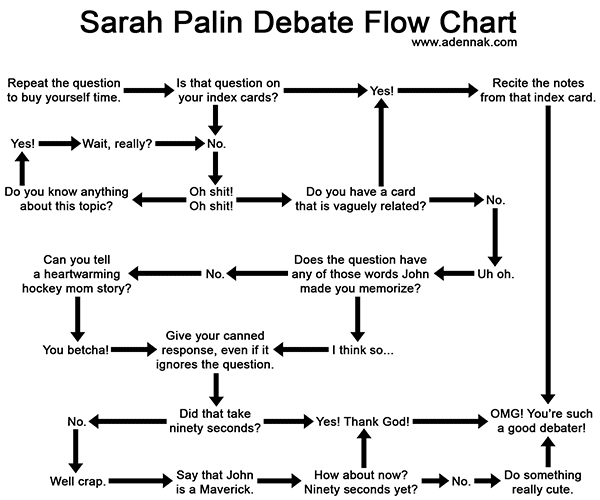
Sarah Palin Debate Flow Chart

Hi all,

Twitter is amazing. I keep finding the most humorous gems. I thought you guys might find this one funny. Especially after that horrible Katie Couric Interview. Yeesh!


Love your way... you are Brilliant!

Alan Davidson is the author of the Free report

"Body Breakthroughs for Life Breakthroughs: How to Peak Your

Physical, Emotional, Mental, Moral, and Spiritual IQs for a

Sensational Life"

available at www.throughyourbody.com

Alan is also the author of Body Brilliance:

Mastering Your Five Vital Intelligences (IQs)

http://bodybrilliancebook.com/bbb_movie/

Watch the Body Brilliance Movie

www.ThroughYourBody.com

1103 Peveto St.


Obama, Obama, Obama


Love your way... you are Brilliant!

Alan Davidson is the author of the Free report

"Body Breakthroughs for Life Breakthroughs: How to Peak Your

Physical, Emotional, Mental, Moral, and Spiritual IQs for a

Sensational Life"

available at www.throughyourbody.com

Alan is also the author of Body Brilliance:

Mastering Your Five Vital Intelligences (IQs)

http://bodybrilliancebook.com/bbb_movie/

Watch the Body Brilliance Movie

www.ThroughYourBody.com

1103 Peveto St.

Houston, TX 77019

713-942-0923

Television Networks Love the VP Debate

Big Ratings for V.P. Debate

Democrats and Republicans are both claiming victory in Thursday’s vice-presidential debate. Soon a third party may cite a win as well: the television networks that showed the event.

Preliminary ratings from Nielsen Media Research indicate strong interest in the matchup between Senator Joseph R. Biden Jr. and Gov. Sarah Palin. In 55 metered markets measured by Nielsen, the debate registered a 45 household rating, meaning that almost half of homes with TV’s were watching the debate.

The vice-presidential candidates apparently beat the contenders at the top of the ticket. Last week’s debate between Barack Obama and John McCain delivered a 31.6 rating.

The early vice presidential numbers are much higher. “If these numbers hold up, this could be one of the most watched debates ever,” Nielsen said Friday afternoon.

National ratings for each network are expected to be released later in the afternoon.

Early ratings released by CNN show the dramatic interest in the Biden-Palin debate. The cable network recorded an audience of 10.6 million viewers for Thursday’s debate, while the same V.P. debate in 2004 only drew 3.3 million viewers to the channel.


Love your way... you are Brilliant!

Alan Davidson is the author of the Free report

"Body Breakthroughs for Life Breakthroughs: How to Peak Your

Physical, Emotional, Mental, Moral, and Spiritual IQs for a

Sensational Life"

available at www.throughyourbody.com

Alan is also the author of Body Brilliance:

Mastering Your Five Vital Intelligences (IQs)

http://bodybrilliancebook.com/bbb_movie/

Watch the Body Brilliance Movie

www.ThroughYourBody.com

1103 Peveto St.

Houston, TX 77019

713-942-0923


Tuesday, September 30, 2008

Obama: To Thine Own Self Be True


Is Barack Obama too cool to be elected president?

That's what some of his own supporters are wondering after the first presidential debate. We aren't talking here about the kind of cool that makes you one of the most popular kids in school.

Instead, the cool at issue here is the kind that means being low-key, a bit reserved and short on emotional displays. Desirable as such characteristics may be in some quarters of society, they are often thought to suggest something is lacking in a politician, who supposedly needs to show passion, a willingness to fight for beliefs and a burning desire to win.

The fear that Sen. Obama lacks those tendencies has been an undercurrent among Democrats for many months, and the concern has oozed to the surface since last week's debate against Republican presidential nominee John McCain. Their fear is that Sen. Obama took too many punches, delivered too few of his own, and explained more than battled.

Just one example: Lincoln Mitchell, writing on the Huffington Post blog, bemoaned the fact that Sen. Obama didn't challenge the McCain assertions during last week's debate that he was "naive" about the ways of the world. "By not fighting this label," Mr. Mitchell wrote, "Obama seemed to almost concede the point. Nobody wants a naive president; and Obama should have challenged this label -- especially because it is wrong."

Moreover, Democrats are anguished that Sen. Obama acknowledged that Sen. McCain was right on some points so often that Republicans instantly put out a television ad pointing out the fact.

It's an understandable concern for Obama partisans, and perhaps Sen. Obama might be better off if he shed some of that natural cool and became more of a jouster.

But that analysis also misses an important point. It's almost always a mistake for a candidate to campaign as something other than what he really is. It's probably a particular mistake this year, given the public mood of 2008.

Consider some history on this point. There seems little doubt that the cerebral Al Gore made a mistake by trying to turn himself into a fire-breathing populist in the 2000 presidential campaign. When Michael Dukakis's 1988 campaign tried to make him appear to be the kind of hawk he wasn't by propping him up in a tank, the result was a disaster.

Ronald Reagan's friends complained regularly that he got into trouble when his handlers overscripted him and wouldn't "let Ronnie be Ronnie," and they were probably right. On the other side of this campaign, Sen. McCain, arising from the ashes after his campaign virtually collapsed in 2007, reverted to the unscripted and independent-sounding campaigner he had been.

The jury is still out on the more recent controlled version of the McCain campaign, though it's noteworthy that his late-summer surge came when he made a McCain-like unconventional decision to choose Alaska Gov. Sarah Palin as his running mate. And now that Gov. Palin's image is picking up some tarnish, there's a quiet let-Sarah-be-Sarah sentiment developing among Republicans who think she has been so tightly controlled to prevent mistakes that her natural appeal has been stifled.

Which brings us to Sen. Obama. The fact is that he is a cool customer. He has been known to shoo to the back of his campaign bus his own aides when they were feverishly working their BlackBerrys and obsessing about late-breaking gossip and poll results. He tends to answer debate questions by analyzing the problem under discussion at some length before winding around to saying what he would do about it. He doesn't seem to like the close-quarters jabbing of a standard political debate, which showed whether his foe was Hillary Clinton or Sen. McCain.

Those are the characteristics that have some Democrats wondering whether they see in Sen. Obama the shadows of another Illinois politician, Adlai Stevenson, rather than the second coming of Bill Clinton. Democrats are particularly sensitive on this point because they have concluded that both Mr. Gore in 2000 and John Kerry in 2004 lost because they allowed themselves to be turned into punching bags during their campaigns.

But this is 2008, and Sen. Obama is a different candidate. From the outset, his campaign persona was built on the idea that, as a young politician and a newcomer to Washington, he stood outside the conventional politics of the past two decades. The appeal of Sen. Obama in many ways lies in the notion that he is a "postpartisan" leader who isn't held hostage by the partisan attack machines that many Americans think their country's political institutions have become.

There's reason to wonder whether Sen. Obama is as postpartisan as his rhetoric suggests, but the point is that the image has worked to his benefit. It also happens to have been the very image that helped Sen. McCain win his party's nomination this year, which tells us something about the mood of the country right now. There is palpable anger afoot in the land, and it seems to be directed at the way politics is practiced as much as anything else. Let no attack go unanswered is one rule of politics; to thine own self be true may be an equally powerful one this year.

Wall Street Journal article located here

Write to Gerald F. Seib at jerry.seib@wsj.com

Image from http://www.britannica.com/blogs/wp-content/uploads/2008/01/obama1.jpg

Love your way... you are Brilliant!

Alan Davidson is the author of the Free report

"Body Breakthroughs for Life Breakthroughs: How to Peak Your

Physical, Emotional, Mental, Moral, and Spiritual IQs for a

Sensational Life"

available at www.throughyourbody.com

Alan is also the author of Body Brilliance:

Mastering Your Five Vital Intelligences (IQs)

http://bodybrilliancebook.com/bbb_movie/

Watch the Body Brilliance Movie

www.ThroughYourBody.com

1103 Peveto St.

Houston, TX 77019

713-942-0923


Tuesday, June 24, 2008

Sensory IQ or Sensory Amnesia: You Get to Choose


Quick Sensory IQ Test for Feeling Great!


We each have five vital intelligences; physical, emotional, mental, moral, and spiritual. Each of these IQs can be measured, and more importantly, boosted.

Sensation is the language of the body. Mastering the four pillars of physical IQ; strength, flexibility, grace, and bearing, rest on your ability to sense your body. They fall into three main categories: pressure, temperature, & vibration.

Here’s your quick Sensory IQ test:

Sit or stand quietly for a moment.

How many different sensations can you feel right now?

One, two, three?

Simultaneously?

The more sensations you can focus on, the better to peak your physical, emotional, mental, moral, and spiritual IQs.

Here’s a wise tip: most of us get so busy with our lives we rarely notice any sensation at all. So if you’re tuned in to one or more you’re doing sensational!

Sense and Centering


Sense:

Sensation is the language of the body; a language many of us have ignored for most of our lives. To feel the sensations of our bodies is to actually experience ourselves; raw, life coursing through us, present in the most immediate sense. The sensations of our bodies ALWAYS happen in present time. It’s impossible for our bodies to happen in the past, or in the present. That’s why Martha Graham, the great American dancer and choreographer, said, “The body never lies.” It is immediate truth. (The mind weaves the stories about what those sensations mean—pulling us out of the raw experience—and into past or present). Stories never happen in the present moment; they are creations of our thoughts.

Sensing meditations have been around since the Buddha. A fundamental part of Vipassana (Insight) mediation is focusing the mind, gently, on the sensations of the body. This takes our awareness away from the stream of thoughts and thinking and onto/into the present moment.


Here’s a very simple sensing exercise:


Sit completely relaxed and comfortable. Turn your attention to your feet. Notice the sensations of temperature, pressure, or vibration; the feel of your feet pressing against the floor; the sensation of fabric or temperature on your feet.

Sense your hips pressing against your seat; opening to the sensations of pressure, temperature, or vibration.

Sense your hands resting.

Sense your head balanced on your neck and shoulders.

Sense the air moving in and out of your nose and throat.

Sense your chest rising and falling with each breath.

Sense your belly moving as your breath moves in and out.

If you notice yourself thinking, instead of sensing, very gently focus your attention once again on your feet and start again.


Sensation: Language of the Body

Each one of these forty thousand qualities is a conscious element, distinct from all the rest, and altogether simple. Each one may be connected with others in various ways. A large part of psychology is taken up with the determination of the laws and conditions which govern the formation of these sensation complexes.

Organic Sensations: Total number--9

Muscle 2/Tendon 1/Joint 1

Alimentary Canal 3/Lungs 1/Sex organs 1

The Total Number of Elementary Sensations

More than 44,435

Elemental Sensations: Five senses

Organic Sensations: Bones, Joints, Tendons, Muscles, Lungs, Sex, Digestive track

Touch: 4 sensations

Pressure and Temperature:

Pressure: Light to hard

Temperature: Warm to Cold

Sight: Eye 32,820 (3 receptors in the retina)

Sensations of Brightness and color

Brightness—Light to Dark

Color—Full Spectrum

Hearing: 11, 600 Sensations

Tone or Noise:

Tone: ‘high’ and ‘low,’ ‘harsh’ and ‘clear,’ ‘shrill’ and ‘mellow;’ and we distinguish ‘thin’ tones from tones which posses ‘volume,’ etc.

Tone: musical scale: C#, E$, Bb, D2$, a5#,

Smell: Unknown number of possible smells:

191 receptors lie on a thumbnail-sized patch of tissue in the upper nasal passage.

(3 receptors in the retina create 31,000 sensations):

smell of a substance is determined by frequencies of vibration of its molecules

smells fall into groups of similar qualities, and that members of each group form graded series, like those in tone or brightness

Taste: Tongue 4

sweet, sour (acidic), bitter, and salt


Sensory IQ Meditation: Everybody Sense Your…


The Qualities of Sensation

Excerpts from The Qualities of Sensation

1. The Quality of Visual Sensations

The source of vision is light. Physical theory regards light as a wave movement in the ether with which space is filled. Light is either mixed or pure (homogeneous): it consists of waves of every possible length, traveling together; and pure if its waves are the same length. Mixed light always excites the sensation of brightness; a single pure light.

A. Sensations of Brightness—We have only kinds or qualities of brightness: black, white, grey, dark grey and light grey. The eye is found to be capable of distinguishing about 660 brightness qualities, varying from the deepest black to the most brilliant white.

B. Sensations of Color—The colors of the solar spectrum are named red, orange, yellow, green, blue, indigo-blue, and violet.

We posses, therefore, at least 660+160+32,000 qualities of visual sensation.


2. The Quality of Auditory Sensations

The source of hearing is sound. From the physical point of view, sound is a movement of the air particles. The movement may be continued and regular (sound-wave) or irregular (shock and concussion), or it may consist of mixtures of waves and shocks, or of successions of shocks. A sound-wave excites the sensation of tone, a mere concussion, or a wave movement of less than two complete undulations, the sensation of simple noise.

What we commonly call the ‘pitch’ or ‘height’ of tones is their psychological ‘quality.’

A. Sensations of Tone—We speak of tons as ‘high’ and ‘low,’ ‘harsh’ and ‘clear,’ ‘shrill’ and ‘mellow;’ and we distinguish ‘thin’ tones from tones which posses ‘volume,’ etc. We also have symbolic names for the twelve tones comprised within each of the seven octaves of the musical scale: C#, E$, Bb, D2$, a5#, etc. The ear is found to be master of tones: we can hear about 11,050 different tones.


3. The Quality of Olfactory Sensations

Smells are classified as agreeable and disagreeable, and named after the objects which give rise to them without regard to their likeness or unlikeness in sensation. It is impossible, in the present state of our knowledge, to say how many qualities of smell the nose can distinguish. In all probability the number is very large. It is also probable that smells fall into groups of similar qualities, and that members of each group form graded series, like those in tone or brightness.

Substantives like ‘scent,’ ‘odor,’ ‘perfume,’ ‘bouquet,’ and adjectives like ‘aromatic,’ ‘fragrant,’ ‘redolent,’ ‘savory,’ are either quite general terms (corresponding to ‘bright,’ ‘color,’ ‘flavor,’ in other sense departments) or refer to groups for practical purposes (cookery, the toilet, etc.) They do not help us towards a psychological classification of smell qualities.


4. The Quality of Gustatory Sensations

There are four qualities of taste: sweet, bitter, acid and salt. All the other ‘tastes’ of which we speak in everyday life are complex perceptions. Thus the ‘taste’ of lemonade is made up of a sweet taste, an acid taste, a scent (the fragrance of lemon,) a sensation of temperature and a pricking (cutaneous) sensation.

Sensations of brightness, color, noise tone and (probably) smell form unbroken series of qualities. We can pass gradually from black to white, through intermediate shades of grey; we can pass from bass to treble, without any break or interruption of the scale, etc. The sensations of taste, on the contrary, do not constitute a series; ‘sweet’ is not in any way nearer or more like ‘acid’ then it is like ‘salt.’ Each of the four qualities stands out distinctly by itself, so that if we did not know that all four came from the tongue, we might be disposed to think that they belonged to separate senses.

Tastes, however, resemble visual sensations in the fact that they contrast with one another. A red seen upon a grey background tinges the neighboring grey with verdigris; and a grey seen through a black tube looks whiter than otherwise would be the case. So an acid seems more sour after a sweet; and a salt and sweet, if applied at the same time to different parts of the tongue, are saltier and sweeter than they would be sensed singularly.


5. The Quality of Touch (Cutaneous)

The skin can be stimulated both mechanically (by pressure, a blow, tickeling, etc.) and thermally (by the application of hot and cold objects.)

Language is rich in names for ‘tastes’ but these names indicate, not simple sensation qualities but mental processes which are really of a complex nature, and arise from the excitation of two or more senses. The mechanical cutaneous sense resembles that of taste in this respect. We are apt to speak of ‘sensations’ of touch, resistance, impact, tickling, etc., and to think of them as coming to us exclusively through the skin. In reality, these processes are all mixtures of sensations. There are only two qualities of the sense of touch: the qualities of pressure and pain.

A. Contact is simply a very light pressure; there is no difference of quality between the two experiences.

B. Hardness and Softness are primarily differences of intensity of pressure. They also contain qualities of temperature (a ‘soft’ is either a ‘clammy’ or ‘warm soft’.)

C. Sharpness and Bluntness are primarily differences of the extent of pressure

D. Roughness and Smoothness differ as interrupted and continuous extent of pressure.

E. Wetness and Dryness are easily confused, if the conditions of the test allow the skin to remain passive.

F. Resistance is a complex perception, containing organic sensations from muscle, sinew and joint, in various proportions, as well as pressure.

G. Touch is active pressure, i.e. pressure plus the organic sensations arising from movement.

H. Impact, if the stimulus is weak, is a sudden pressure, probably mixed with the organic sensation of tickling.

Many of the complexes resolved here into cutaneous and organic qualities, also contain a visual quality, remembered or imagined.

A. Sensatinos connected with Thermal Stimulation—Language and scientific observation are here in agreement. Both alike recognize two qualities of the thermal cutaneous sense: warmth and cold. We may lay it down as a general rule that any stimulus whose temperature is above 34°C (the average natural temperature of the healthy skin) gives rise to a sensation of warmth, and all sensations below this temperature give the sensation of cold.

The ‘warm’ and ‘cold’ spots of the skin, like the pressure-spots, occur only where a sensory nerve-fibril terminates in the cutis. The investigation of the temperature sense is exceedingly difficult, since the skin adapts itself readily to wide differences of outside temperature.


6. The Quality of Musucal, Tendinous and Articular Sensations

In the preceding sections, we have been dealing with the sensations of the special senses. We have taken for granted that a single quality (red, hot, sweet) can be sensed by itself. This is not entirely true: consciousness is always complex, always consisting of more than one process. But it is approximately true. We can attend strongly to one simple impression that sensations by other stimuli activate at the same time.

A. Muscular Sensation—The ‘voluntary’ (striped) muscles of the body are supplied with sensory nerves. The fibrils of these nerves terminate among the muscle fibers just as the cutaneous nerve-fibrils terminate. Muscular contraction occasions a specific sensation.

B. Tendinous Sensation—Like the muscles to which they are attached, the tendons are supplied with sensory nerves. The nerve-endings in tendon are different from those in muscle or skin. The specific sensation is that of tension or strain.

C. Articular Sensation—The surfaces of the joints are richly supplied with sensory nerves, whose endings resemble those found in the skin. The quality of sensation, like muscular, may be described as pressure. But the articular sensation is far more important than muscular, since it is one of the two principal sources from which we obtain knowledge or the position or movement of the limbs.


7. The Quality of the Alimentary Sensations

Here we seem to find at least three new qualities: those of hunger, thirst, and nausea. Each of these experiences is complex; but each appears to contain, in addition, to sensations of pressure and temperature, a specific quality.

A. Hunger is localized in the stomach. When the stomach has digested a mass amount of food, its walls begin to dry, and fall into folds or ridges. The dryness and folding somehow stimulates the nerve endings in the mucous membrane of the stomach. There then arises the organic sensation of hunger.

B. Thirst is localized in the mouth and pharynx. A dryness of the mucous membrane in this region somehow stimulates the nerve-endings. Thirst can be removed by painting the back of the mouth with a weak solution of citric acid.

C. Nausea seems to be due to the pressure upon the nerve endings in the esophagus which occurs during the first stages of the vomiting reflex. It may be that this quality is that of pressure. Nausea usually contains sensations of taste, smell, and giddiness


8. The Quality of the Circulatory, Respiratory, and Sexual Sensations

Tickling, itching, tingling, pins and needles, feverishness, etc., are not simple sensation qualities, but complexes, made up of sensations. The actions of the lungs, like that of the heart, do not normally excite sensation. Sensations of breathlessness, suffocation, etc. are the stimulation of nerve-endings within the lungs themselves apparently arouses a true respiratory sensation.

The sex organs furnish a specific sensation quality. They are also sensitive to pressure and temperature.


9. The Quality of the State Sense

There is good evidence for the hypothesis that the canals and vestibules of the ear constitute an apparatus which assists us to maintain our equilibrium and to estimate correctly our position in space. As we move our head or body in different directions, the endolymph washes against different groups of hair-cells. Ordinarily, the action of the apparatus is not attended by sensation (heart and lungs) but we receive from the vestibular nerve-endings the organic sensation of giddiness.

A. Pain—Pain seems to be, like pressure, both a specific (cutaneous) and an organic sensation quality. It is set up both by injury to the epidermis and by excessive muscular contraction. The concrete pain excited by a dazzling light or a cut of a finger contains three distinct factors: a sensation of special sense, the sensation of pain, and a severe unpleasantness. It is now certain that pain is derived only from skin and mucous membranes, striped muscle, joint, and possibly bone-tissue.


10. The Total Number of Elementary Sensations

Eye 32,820

Ear (audition) 11, 600

Tongue 4

Skin 4

Muscle 2

Tendon 1

Joint 1

Alimentary Canal 3

Lungs 1

Sex organs 1

Ear (static sense) 1

More than 44,435

Each one of these forty thousand qualities is a conscious element, distinct from all the rest, and altogether simple. Each one may be connected with others in various ways. A large part of psychology is taken up with the determination of the laws and conditions which govern the formation of these sensation complexes.

A slight abnormality is much more common than is ordinarily supposed. Very many people are more or less color-blind, they confuse red with green, or have a shortened spectrum. Very many people are tone-deaf, have a defective sense of smell, etc. But when all allowances are made, the average number of conscious elements must run in the tens of thousands.


Be Brilliant!

Love your way, ad

Alan Davidson is the author of the Free report

"Body Breakthroughs for Life Breakthroughs: How to Peak Your

Physical, Emotional, Mental, Moral, and Spiritual IQs for a

Sensational Life"

available at www.throughyourbody.com

Alan is also the author of Body Brilliance:

Mastering Your Five Vital Intelligences (IQs)

http://bodybrilliancebook.com/bbb_movie/


Monday, October 29, 2007

Body Mind Spirit Brilliance with your Five Vital IQs

We were a diverse group: a police lieutenant and a paramedic, an arch Democrat, other massage therapists and chiropractors, a psychic, psychotherapists, students and teachers, a carpenter and a director of nonprofit organizations. We agreed to meet for nine weekends throughout the year and a weeklong retreat in July. Some of us were there for our professions, but we were all there for ourselves.

At the break we mingled and ate delicious pastries from the Tomales Bakery on Highway 1. Still feeling self-conscious, I cautiously visited with my classmates and won the prize for coming from the greatest distance. Some of them had traveled for several hours to get there, but I was the only non-Californian. I remembered that California is as long as Texas is wide. Thankfully, my classmates welcomed me, and I began to relax and feel more comfortable with the group.
With the preliminaries over, I looked forward to participating in the Lomi School’s regimen of bodywork, exercise, meditation and group process. I was convinced that Robert, Richard and the class would help me heal my depression and all the sadness of my recent life. As you will see, I still had much to learn.

But first, if I am going to show you how to peak your essential intelligences to achieve body brilliance, I need to discuss how perceptions of our bodies have changed over time and the theories and techniques surrounding that metamorphosis.

Love your way,

Alan Davidson, founder of
http://www.throughyourbody.com/
and author of Body Brilliance:
Mastering Your Five Vital
Intelligences (IQs)’

http://bodybrilliancebook.com/bbb_movie/

Watch the Body Brilliance Movie

Dedicated to our healthy, happy, and prosperous world through the full enlightenment of every human being.

Through Your Body
1103 Peveto St.
Houston, TX 77019
713-942-0923